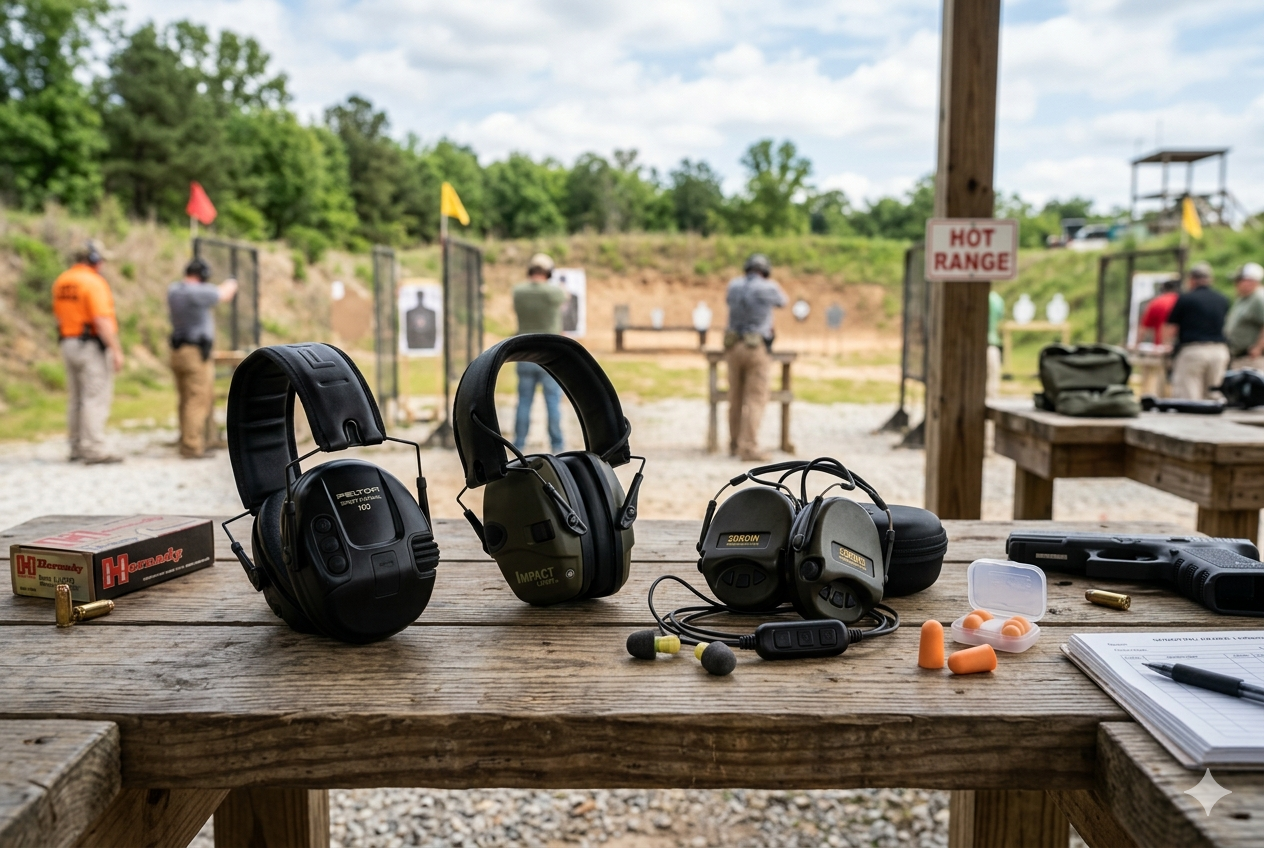
- Why is ear protection essential when shooting or working with firearms?
Exposure to gunfire and loud noises (often well above 140 decibels) can cause permanent hearing damage, including tinnitus and loss of high-frequency hearing.
- What does “electronic ear muffs” mean, and how do they differ from passive ear muffs?
Electronic ear muffs amplify ambient sounds (like talking or range commands) but automatically clamp down or block noise when a loud impulse like a gunshot occurs. Passive ear muffs simply provide a fixed level of noise reduction without amplification.
- Are electronic ear muffs safe to use in wet or adverse conditions?
Some models are designed to be weather-resistant or rugged enough for outdoor use. Check whether the model has IP ratings or protective seals, as moisture and debris can damage electronics. If you shoot in rain or dusty environments, pick a model with good durability specs.
- Are there specific ear protection laws in South Africa I need to know about?
While hearing protection is standard safety practice at shooting ranges, local laws typically don’t mandate specific devices. However, many ranges or firearm clubs require you to use certified ear protection as a safety policy. It’s always a good idea to follow range rules and manufacturer recommendations.
- How long will the ear protection units last, and do they need maintenance?
Passive muffs require little maintenance other than cleaning and occasional replacement of foam or cushion parts. Electronic units will need battery or charging upkeep and periodic checks on wiring and seals. Proper care ensures reliability and prolongs lifespan.