self defense
June 30 Protests in South Africa: How to Stay Safe and Prepared
Jun
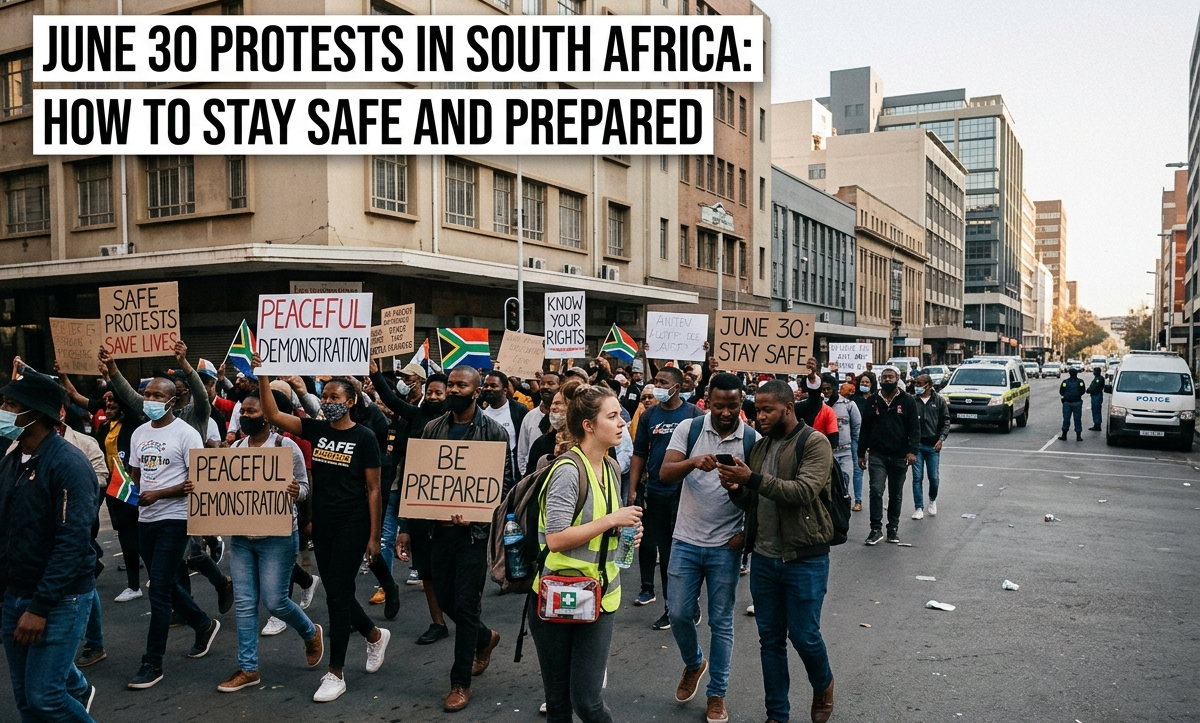
South Africa has seen heightened tension throughout June 2026 as the civic movement March and March and a number of affiliated organisations called for nationwide demonstrations on 30 June, tied to a self-imposed deadline for undocumented foreign nationals to leave the country. The South African Police Service has confirmed it is deploying additional resources nationwide, with private security companies also assisting in monitoring hotspots. Whatever your view on the underlying issues, large-scale protest activity of this kind brings real, practical safety considerations for ordinary South Africans — whether you’re commuting to work, running a small business, or simply trying to get your family home safely.
This guide focuses purely on practical safety and preparedness. It is not a commentary on the politics of the demonstrations, and it does not endorse vigilantism, intimidation, or violence of any kind against any person. Government officials have been explicit that ordinary citizens, refugees, asylum seekers, and documented or undocumented foreign nationals are all entitled to constitutional protection, and that no private group has the authority to demand documentation, block access to essential services, or decide who may live in a community.
What’s Actually Happening on 30 June
The government has stressed repeatedly that 30 June is not an official national shutdown and that businesses, schools, and clinics should continue operating normally. That said, organisers have applied for permits for demonstrations in multiple provinces, and the lead-up to the date has already included isolated incidents of unrest, evictions, and violence in some communities, particularly in KwaZulu-Natal and parts of Gauteng and the Western Cape. Police have opened dozens of criminal cases linked to incitement and public order offences in the weeks before the deadline, and officials have warned that some marchers have carried weapons such as sjamboks and sticks, despite organisers insisting their events will remain peaceful.
In short: most of the country will likely continue functioning normally, but there are real pockets of risk around march routes, informal settlements, transport hubs, and areas with a history of community tension. Treat 30 June and the days around it the way you would any period of elevated civil unrest risk — not as a reason to panic, but as a reason to plan ahead.
Before the Day: Plan Like You Mean It
- Check your route. Search for planned march routes and gathering points in your area before you travel, and identify at least one alternative route to work, school, or home.
- Follow trusted, local sources only. Stick to SAPS statements, your local municipality, and established news outlets rather than unverified social media posts, which can spread rumours and inflame situations.
- Fuel up and stock essentials early. Fill your vehicle’s tank, draw some cash, and make sure you have basic supplies at home in case of localised disruption to shops or transport.
- Charge every device. A charged phone and a backup power bank matter far more during unrest than at any other time — you may need to call for help, check news, or contact family.
- Share your plans. Let a family member or colleague know your route and expected arrival time if you must travel through or near an affected area.
- Review your home and business security. Working locks, visible lighting, and a reliable alarm or camera system are far more useful set up in advance than scrambled together at the last minute.
If You’re Caught Near a Protest or Gathering
- Keep your distance. Crowds can shift quickly from peaceful to chaotic. Give any gathering, march, or roadblock as wide a berth as possible.
- Don’t engage. Avoid arguing with protesters, filming confrontations up close, or trying to push through a crowd — journalists and bystanders have already been caught up in scuffles during the lead-up to 30 June.
- Turn back early. If you see a crowd forming, a roadblock, or smoke ahead, change direction before you’re committed rather than trying to push through.
- Stay in your vehicle where possible. A locked car is generally safer than being on foot near a crowd; keep doors locked and windows up, but never abandon a vehicle in the middle of a blocked road — reverse out calmly if you can.
- Watch for breakaway groups. Officials have flagged the risk of small armed splinter groups acting independently of the main, permitted marches. These pose the greatest risk of sudden violence, so prioritise distance over curiosity.
Personal and Home Safety Essentials
Most protest-related risk to ordinary people comes from being in the wrong place at the wrong time, not from targeted violence. Sensible, legal personal safety preparation is about awareness and de-escalation first, with non-lethal protection as a backup — never as a first response.
- A reliable personal alarm or pepper spray can buy you time to get away from a threatening situation.
- A compact, high-lumen flashlight is genuinely useful for visibility during load shedding, after-dark travel, or any situation where street lighting can’t be trusted.
- Stun devices and similar self-defence tools are legal for personal protection in South Africa within strict limits — know your local regulations before carrying anything of this kind.
- Basic first aid supplies at home and in your vehicle are worth having regardless of unrest, but especially during periods when emergency response times may be longer than usual.
If you’re considering any self-defence or security equipment, our team at BNT Online can help you choose gear that’s legal, practical, and suited to genuine personal safety rather than confrontation.
For Business and Property Owners
- Brief your staff in advance on what to do if a protest or crowd approaches your premises, including who locks up, who contacts security, and where staff should shelter.
- Confirm your alarm and camera systems are fully operational, and that footage is backed up off-site or to the cloud.
- Avoid confrontation with anyone demanding to see documentation or attempting to dictate who may enter your premises — this is not a lawful demand from any private individual or group, and your safest response is to call SAPS rather than engage directly.
- Keep emergency numbers, your nearest SAPS station, and your private security provider’s contact details easily accessible to all staff.
Know Your Rights and Limits
The South African Constitution protects the right to peaceful assembly and protest, and it equally protects every person in the country — citizen or foreign national, documented or not — from intimidation, vigilantism, and violence. Acting Police Minister Firoz Cachalia has stated clearly that there will be zero tolerance for xenophobic violence or vigilantism, and that private individuals and groups have no authority to determine who may live in a community or to demand identification from members of the public. If you witness intimidation, threats, or violence, the safest and most responsible response is to report it to SAPS rather than intervene directly.
Emergency Numbers Worth Saving Now
- SAPS Crime Stop: 08600 10111
- Police, fire, and ambulance (national emergency number): 10111 or 112 from a cellphone
- Your local SAPS station’s direct line — save it now rather than searching for it under pressure
- Your private security or armed response provider’s emergency line
The Bottom Line
Periods of heightened civil unrest in South Africa tend to be short, localised, and largely avoidable with a bit of planning. The vast majority of people across the country will go about their day on 30 June without incident. The goal of preparation isn’t fear — it’s simply making sure that if you do find yourself near a march, a roadblock, or an unpredictable situation, you’ve already made the decisions that keep you, your family, and your staff safe, calm, and out of harm’s way.
Stay safe, stay informed through trusted sources, and treat anyone around you — regardless of where they’re from — with the same constitutional dignity the law affords all of us.