Uncategorized
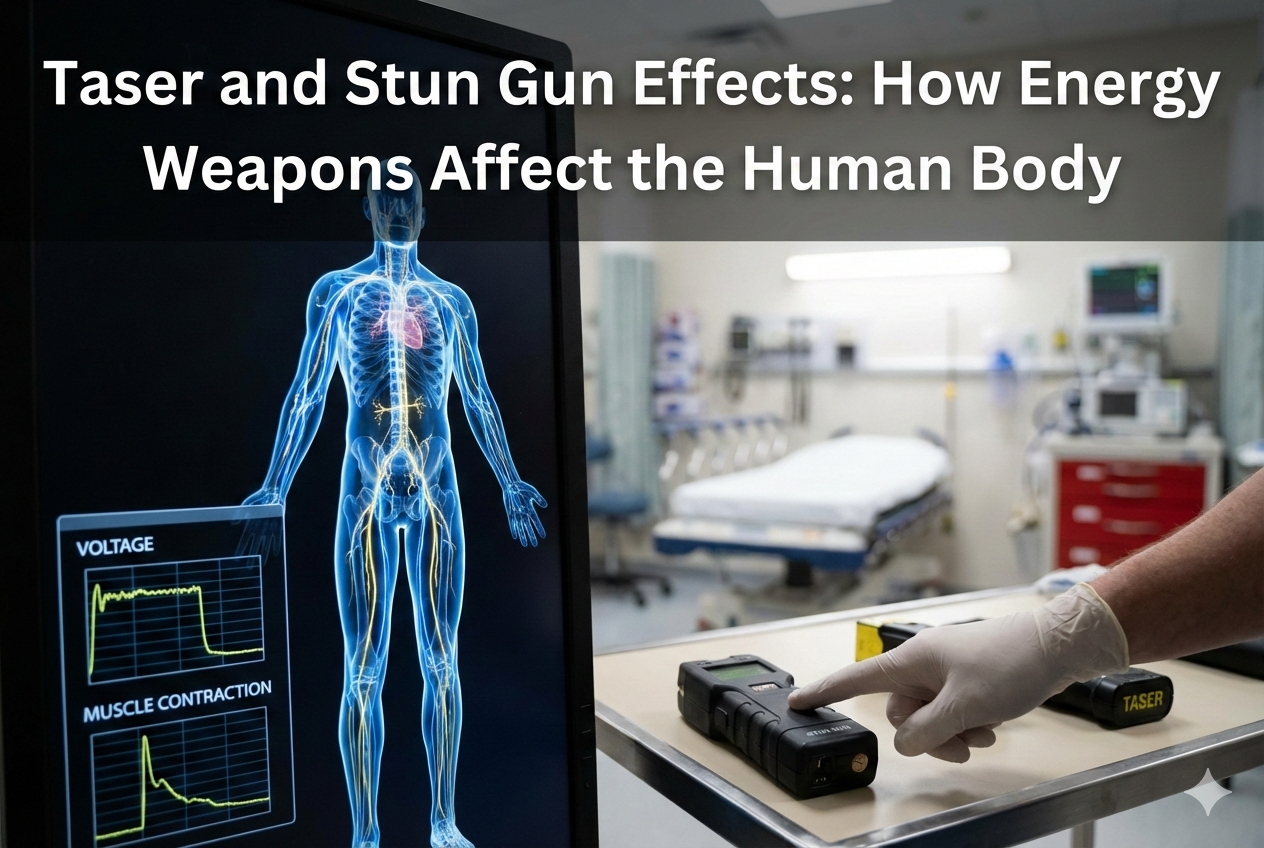
Taser and Stun Gun Effects: How Energy Weapons Affect the Human Body
Feb
Personal safety is a growing concern worldwide, and many people look to non-lethal self-defense tools as practical options for protection. Among the most popular choices are tasers and stun guns, collectively known as conducted energy weapons (CEWs). These devices are designed to temporarily incapacitate an attacker, giving the user a chance to escape and seek help without causing permanent harm.
But many people still ask important questions: What happens when you taser someone? What does a taser do to your body? Do tasers work through clothes? Understanding how these devices function, how they affect the human body, and what their real-world effects are can help users make informed decisions.
In this comprehensive guide, we will explore the science, physiological effects, safety considerations, legal perspectives, and practical use of tasers and stun guns, giving you a complete understanding of how these energy weapons work.
Understanding Tasers and Stun Guns: What’s the Difference?
Although people often use the terms interchangeably, tasers and stun guns are technically different devices.
What Is a Taser?
A taser fires two small dart-like electrodes attached to thin wires. These darts embed into clothing or skin and deliver electrical pulses that override the body’s neuromuscular system. This causes temporary muscle paralysis, making it extremely difficult for the target to move.
- Effective range: Typically 10–25 feet
- Function: Incapacitation through neuromuscular disruption
- Common use: Law enforcement and civilian self-defense
What Is a Stun Gun?
A stun gun requires direct contact with the attacker’s body. Instead of firing probes, it delivers an electric shock through metal prongs.
- Effective range: Contact only
- Function: Pain compliance and muscle disruption
- Common use: Civilian self-defense
Both devices are classified as non-lethal weapons, meaning they are designed to stop threats without causing permanent injury.
How Tasers and Stun Guns Work on the Human Body
To understand their effects, it’s important to grasp the basic principle behind these weapons.
Electrical Stimulation and Muscle Control
The human body operates on electrical signals. The brain sends impulses through the nervous system to control muscles. Tasers and stun guns disrupt these natural signals by introducing an external electrical current, causing muscles to contract uncontrollably.
This leads to:
- Sudden muscle tightening
- Loss of voluntary control
- Temporary immobilization
What Happens When You Taser Someone?
When a taser is deployed, the following sequence usually occurs:
1. Probe Deployment
Two probes are fired from the taser cartridge and penetrate clothing or skin. They spread apart to cover a larger muscle group, creating an electrical circuit.
2. Neuromuscular Incapacitation
The electrical pulses override the body’s natural nerve signals. This causes intense muscle contractions, often resulting in the person falling to the ground instantly.
3. Temporary Paralysis
For the duration of the electrical cycle (usually 5 seconds), the target experiences complete or near-complete loss of voluntary muscle control.
4. Recovery Phase
After the current stops, muscle function gradually returns. Most individuals recover within seconds to minutes, although soreness and fatigue can persist.
Key takeaway: When you taser someone, their muscles temporarily shut down, preventing coordinated movement and allowing the user time to escape or restrain the attacker.
What Does a Taser Do to Your Body?
The physiological effects of a taser or stun gun can be intense but are typically short-lived.
Immediate Effects
- Severe muscle contractions
- Temporary paralysis
- Disorientation
- Loss of balance
- Intense pain (especially with stun guns)
Short-Term Effects
- Muscle soreness
- Fatigue
- Minor burns or skin irritation at contact points
- Small puncture wounds (from taser probes)
Psychological Effects
- Shock and confusion
- Temporary fear or panic
- Increased adrenaline response
For most healthy individuals, these effects fade quickly, leaving no lasting damage.
Do Tasers Work Through Clothes?
One of the most common questions is: Do tasers work through clothes? The short answer is yes, they generally do, but several factors influence their effectiveness.
How Tasers Penetrate Clothing
Taser probes are designed to:
- Pierce light to medium clothing such as t-shirts, jackets, hoodies, and jeans
- Maintain electrical contact even through thick fabrics
Factors That Affect Performance
- Thickness of clothing: Very thick winter coats may slightly reduce penetration.
- Distance between probes: Greater probe spread increases effectiveness.
- Material type: Denim, cotton, and wool are typically no barrier.
In most real-world situations, tasers are highly effective through clothing, making them practical for everyday self-defense.
Effects of Stun Guns: What Happens on Contact?
Unlike tasers, stun guns rely on direct contact, so their effects differ slightly.
Immediate Impact
- Intense localized pain
- Muscle spasms
- Temporary disorientation
Physical Response
The pain compliance method forces the attacker to recoil, withdraw, or release their grip. Some stun guns also cause brief muscle locking, especially when applied to large muscle groups.
Limitations
Because stun guns require close contact, they may be less effective against:
- Highly aggressive attackers
- Individuals under the influence of drugs or alcohol
- Large or heavily muscled individuals
How Long Do the Effects Last?
Tasers
- Primary incapacitation: 5 seconds (standard cycle)
- Full recovery: Seconds to a few minutes
- Muscle soreness: Up to 24–48 hours
Stun Guns
- Pain and disorientation: Immediate but short-lived
- Recovery: Usually within seconds
- Lingering effects: Minimal
The temporary nature of these effects is what makes these tools non-lethal and legally acceptable in many regions.
Are Tasers and Stun Guns Safe?
While tasers and stun guns are considered non-lethal, no weapon is completely risk-free.
General Safety Record
Extensive studies show that tasers and stun guns are significantly safer than firearms or batons when used correctly.
Potential Risks
- Falls due to sudden muscle collapse
- Cardiac complications in individuals with pre-existing heart conditions
- Burns at contact points
- Secondary injuries from uncontrolled falls
Who Is at Higher Risk?
- People with heart disease
- Those under heavy drug influence
- Elderly individuals
- People with respiratory conditions
In most healthy individuals, the risks remain very low.
Legal and Ethical Considerations
Before purchasing or carrying a taser or stun gun, it’s crucial to understand local laws and regulations.
Common Legal Restrictions
- Some countries restrict civilian ownership
- Certain regions require permits
- Some cities prohibit tasers entirely
Ethical Use
- Self-defense only
- Use proportional force
- Deploy only when facing immediate threat
Misuse can result in legal consequences, so responsible ownership is essential.
Taser vs Stun Gun: Which Is More Effective?
| Feature | Taser | Stun Gun |
| Range | 10–25 feet | Contact only |
| Incapacitation | High | Moderate |
| Ease of Use | Very high | Moderate |
| Stopping Power | Strong | Moderate |
| Best For | Distance defense | Close-contact defense |
Conclusion: Tasers provide better stopping power due to distance and neuromuscular incapacitation, while stun guns are compact and suitable for close encounters.
Real-World Scenarios: How These Devices Protect You
Personal Safety
Ideal for joggers, students, and commuters seeking peace of mind.
Home Defense
Provides a non-lethal option for confronting intruders.
Professional Use
Security personnel and law enforcement rely on tasers for controlled force.
Training and Proper Use
Owning a taser or stun gun without training is like owning a fire extinguisher without knowing how to use it.
Basic Safety Tips
- Aim for large muscle groups
- Maintain proper distance (for tasers)
- Avoid head, neck, and chest when possible
- Use only when escape is necessary
Proper training ensures maximum effectiveness and minimal risk.
Psychological Impact on Attackers
The loud crackling sound, visible electrical arc, and fear of pain often deter attackers even before deployment. This psychological deterrence alone can prevent many confrontations.
Conclusion: Understanding Taser and Stun Gun Effects
Tasers and stun guns offer a powerful yet non-lethal means of personal protection. By temporarily disrupting muscle control, these energy weapons allow users to defend themselves effectively without causing permanent harm.
Understanding what happens when you taser someone, what a taser does to the body, and whether tasers work through clothes ensures responsible and informed use. With proper training, legal awareness, and ethical responsibility, tasers and stun guns can be invaluable tools for modern self-defense.
Frequently Asked Questions (FAQ)
1. What happens when you taser someone?
When you taser someone, electrical pulses override their nervous system, causing temporary muscle paralysis, loss of balance, and immobilization for several seconds.
2. What does a taser do to your body?
A taser disrupts nerve signals, causing involuntary muscle contractions, temporary paralysis, pain, and short-term disorientation. Most people recover quickly.
3. Do tasers work through clothes?
Yes, tasers are designed to work through most types of clothing, including jackets and jeans. Only extremely thick clothing may reduce effectiveness slightly.
4. Is it safe to use a taser for self-defense?
For healthy individuals, tasers are generally safe and far less dangerous than firearms. However, they should only be used responsibly and when necessary.
5. How long do taser effects last?
The main incapacitating effects last about 5 seconds, with full muscle control returning shortly afterward. Mild soreness may persist for a day or two.
6. Can a taser cause permanent injury?
Permanent injuries are rare when tasers are used correctly. Most injuries result from falls rather than the electrical shock itself.