Knives
Utility Cutting Tools Explained: Pocket Knives, Multi-Tools and Box Cutters
Jan
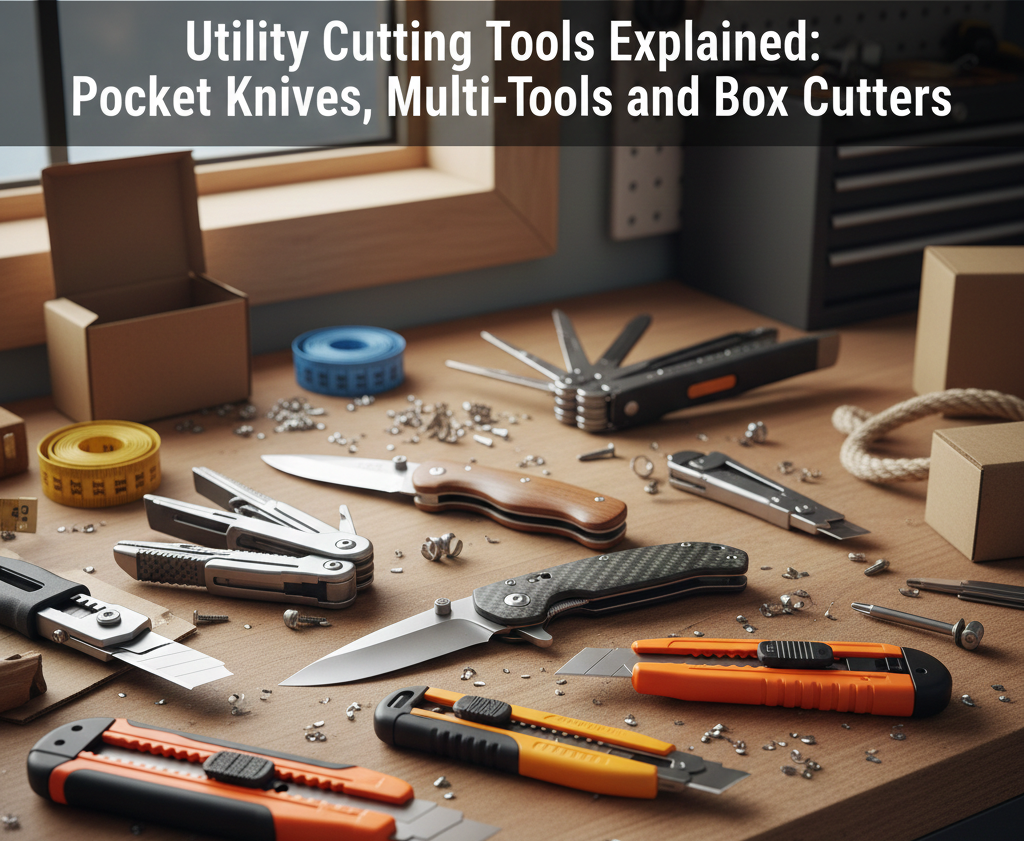
Cutting tools are among the most frequently used everyday items, yet they are often the least understood. From pocket knives carried daily to box cutters used on job sites and utility tools designed for precision, each serves a distinct purpose. Choosing the right cutting tool is not about owning more equipment—it is about understanding function, safety, and efficiency.
In South Africa, where people balance urban work, outdoor lifestyles, and hands-on trades, reliable cutting tools remain essential. Pocket knives, utility knives, and box cutters are no longer basic accessories; they are purpose-built tools engineered for specific tasks. Understanding how they differ helps users work smarter, safer, and more effectively.
This guide explores how knives, tools, and box cutters function, when each is most appropriate, and why utility and pocket knives remain indispensable in everyday life.
The Role of Cutting Tools in Modern Daily Life
Despite advances in technology, manual cutting tools remain irreplaceable. They do not rely on power, are always accessible, and perform consistently across environments.
In South African homes, businesses, farms, and outdoor spaces, cutting tools are commonly used for:
- Opening packaging and cartons
- Cutting rope, cable ties, and straps
- Trimming materials for DIY and repairs
- Food preparation and outdoor use
- Trade, logistics, and warehouse tasks
The key difference lies not in whether a tool cuts, but how safely, efficiently, and accurately it does so.
Pocket Knives: Compact Tools with Everyday Utility
Pocket knives are designed for portability. Their folding mechanism allows the blade to retract into the handle, making them easy to carry and safer when not in use.
Why Pocket Knives Are Popular
Pocket knives are valued for their balance between convenience and capability. They are small enough for everyday carry yet strong enough for demanding tasks.
Key advantages include:
- Compact size and light weight
- One-handed operation on modern designs
- Secure locking mechanisms
- Versatility across multiple tasks
For many South Africans, a pocket knife is part of daily preparedness—useful in unexpected situations without being intrusive.
Typical Uses
- Cutting rope, string, or cordage
- Light DIY and household tasks
- Opening boxes or packaging
- Outdoor activities such as camping or fishing
Pocket knives are especially suited to users who need a general-purpose tool that can be carried discreetly and accessed quickly.
Utility Knives: Precision and Control for Work Tasks
Utility knives are purpose-built for controlled cutting, particularly in work environments. They typically feature replaceable blades, ensuring consistent sharpness without frequent sharpening.
Design and Function
Unlike pocket knives, utility knives prioritise precision over portability. Many feature straight blades designed for clean, predictable cuts.
Their strengths include:
- Razor-sharp replaceable blades
- Enhanced cutting accuracy
- Reduced maintenance requirements
- Safer blade control for repetitive tasks
In South Africa’s construction, retail, logistics, and manufacturing sectors, utility knives are widely used because they offer reliability and cost efficiency.
Where Utility Knives Excel
- Cutting cardboard and packaging
- Trimming insulation or plastic
- Craft and workshop applications
- Professional trade environments
Because blades can be replaced quickly, utility knives reduce downtime and ensure consistent performance.
Box Cutters: Efficiency and Safety in High-Volume Cutting
Box cutters are a specialised type of utility knife designed specifically for opening boxes and cutting packaging materials. While simple in appearance, they play a critical role in safety-focused workplaces.
Why Box Cutters Are Essential
In warehouses, retail stores, and delivery operations, box cutters help prevent accidents caused by excessive blade exposure.
Key benefits include:
- Short blade length for controlled cuts
- Reduced risk of deep cuts or punctures
- Lightweight and easy handling
- Ideal for repetitive tasks
Many box cutters are designed to minimise blade exposure, making them safer for environments where speed and safety must coexist.
Comparing Pocket Knives, Utility Knives, and Box Cutters
Understanding the differences between these tools helps users choose the right one for the job.
Portability vs Purpose
Pocket knives excel in portability and versatility, while utility knives and box cutters focus on precision and task-specific efficiency.
Blade Design
- Pocket knives often have thicker blades for durability
- Utility knives use thin, razor-sharp blades
- Box cutters prioritise shallow, controlled cuts
Safety Considerations
Each tool offers safety in different ways:
- Pocket knives rely on locking mechanisms
- Utility knives rely on blade control and replaceability
- Box cutters rely on limited blade exposure
Selecting the right tool reduces injury risk and improves productivity.
Blade Materials and Performance
Blade material affects sharpness, durability, and maintenance. Even in utility and box cutters, blade quality matters.
Stainless Steel
Resists corrosion and performs well in South Africa’s coastal and humid regions.
Carbon Steel
Offers exceptional sharpness but requires more care to prevent rust.
Replaceable Blades
Utility and box cutters benefit from disposable blades, ensuring optimal sharpness without long-term maintenance.
Ergonomics and User Comfort
Comfort is not a luxury—it is a necessity for safety and efficiency.
Handle Design
Ergonomic handles reduce hand fatigue and improve control during extended use.
Grip Texture
Textured or rubberised grips are especially useful in dusty, wet, or industrial environments.
Balance and Weight
Well-balanced tools reduce strain and increase cutting accuracy.
Safety Practices for Cutting Tools
Even the best tool becomes dangerous if used incorrectly.
Safe Usage Guidelines
- Always cut away from the body
- Use the correct tool for the task
- Keep blades sharp—dull blades slip more easily
- Store tools safely when not in use
In workplaces, following safety protocols significantly reduces injury risk.
Cutting Tools in Outdoor and Everyday Scenarios
South Africa’s outdoor culture makes compact cutting tools particularly valuable.
Outdoor Applications
- Food preparation while camping
- Cutting rope or fishing line
- General campsite maintenance
A pocket knife often serves as the most practical outdoor companion due to its balance of size and function.
Legal and Responsible Ownership in South Africa
South African law focuses on intent rather than ownership when it comes to knives. Utility tools are generally acceptable when carried for legitimate purposes.
Responsible ownership includes:
- Using tools strictly for their intended purpose
- Avoiding aggressive display in public
- Transporting tools safely
When used responsibly, cutting tools remain practical instruments rather than liabilities.
Maintenance and Longevity
Proper care extends the life of any cutting tool.
Cleaning
Remove debris and moisture after use.
Blade Care
Replace or sharpen blades regularly to maintain performance.
Storage
Store tools in dry environments to prevent corrosion and damage.
Why Utility and Pocket Knives Remain Essential
Despite modern automation, cutting tools remain fundamental. They are reliable, adaptable, and always ready. Whether in professional environments or everyday situations, pocket knives, utility knives, and box cutters continue to serve as indispensable tools.
Their continued relevance lies in simplicity: sharp edges, thoughtful design, and practical function.
Conclusion
Understanding the difference between pocket knives, utility knives, and box cutters allows users to work more efficiently and safely. Each tool serves a specific purpose, and choosing the right one improves productivity while reducing risk.
In South Africa’s diverse environments—from urban workplaces to outdoor settings—having the correct cutting tool makes everyday tasks easier and more controlled. When selected thoughtfully and used responsibly, these tools remain some of the most valuable items a person can own.
Frequently Asked Questions (FAQ)
1. What is the main difference between a pocket knife and a utility knife?
A pocket knife is designed for portability and versatility, while a utility knife focuses on precision and controlled cutting with replaceable blades.
2. Are box cutters safer than pocket knives?
Box cutters are generally safer for repetitive packaging tasks due to limited blade exposure and controlled cutting depth.
3. Can a pocket knife replace a box cutter?
For occasional tasks, yes—but for high-volume cutting, a box cutter is more efficient and safer.
4. How often should utility knife blades be replaced?
Blades should be replaced as soon as cutting becomes difficult or inconsistent to maintain safety and efficiency.
5. Are these tools legal to carry in South Africa?
Yes, when carried for legitimate utility purposes and used responsibly.
6. Which cutting tool is best for everyday carry?
A compact pocket knife offers the best balance of portability and functionality for everyday use.